
Subnasal lip lift with Dr. Henry Sandel
Subnasal Lip Lift
A short procedure that shortens the distance between the base of the nose and the upper lip, showing more of the lip you already have rather than adding volume to it.
At a glance
Surgeon
Dr. Henry Sandel
Anesthesia
Sedation, in our surgery center
Time
About an hour
Incision
Hidden at the base of the nose
Sutures out
Day 7, in the office
Result
Permanent
Results
A shorter philtrum, more lip show.
The change is measured in millimetres, and it reads as a more youthful proportion between the nose and the mouth rather than as a larger lip. No filler was used.
See the full gallery →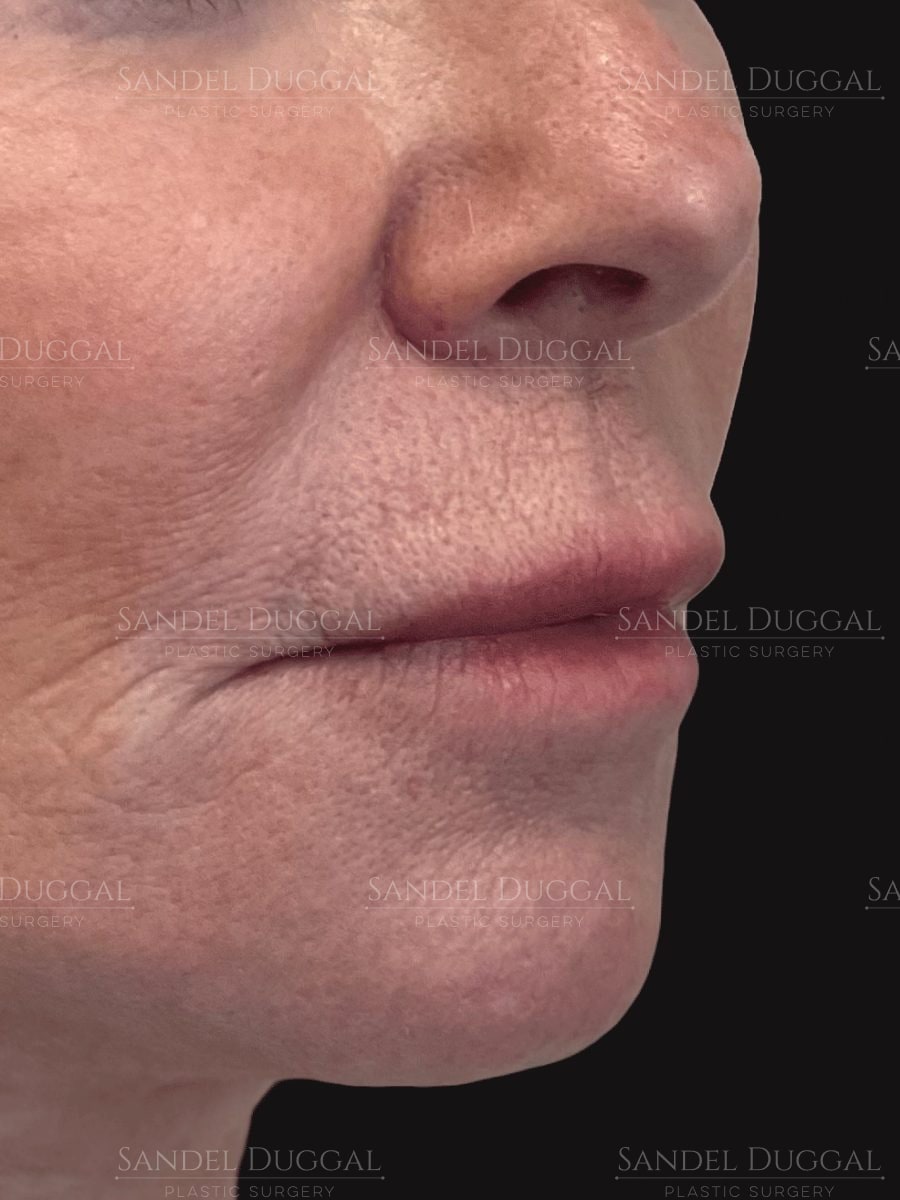 Before
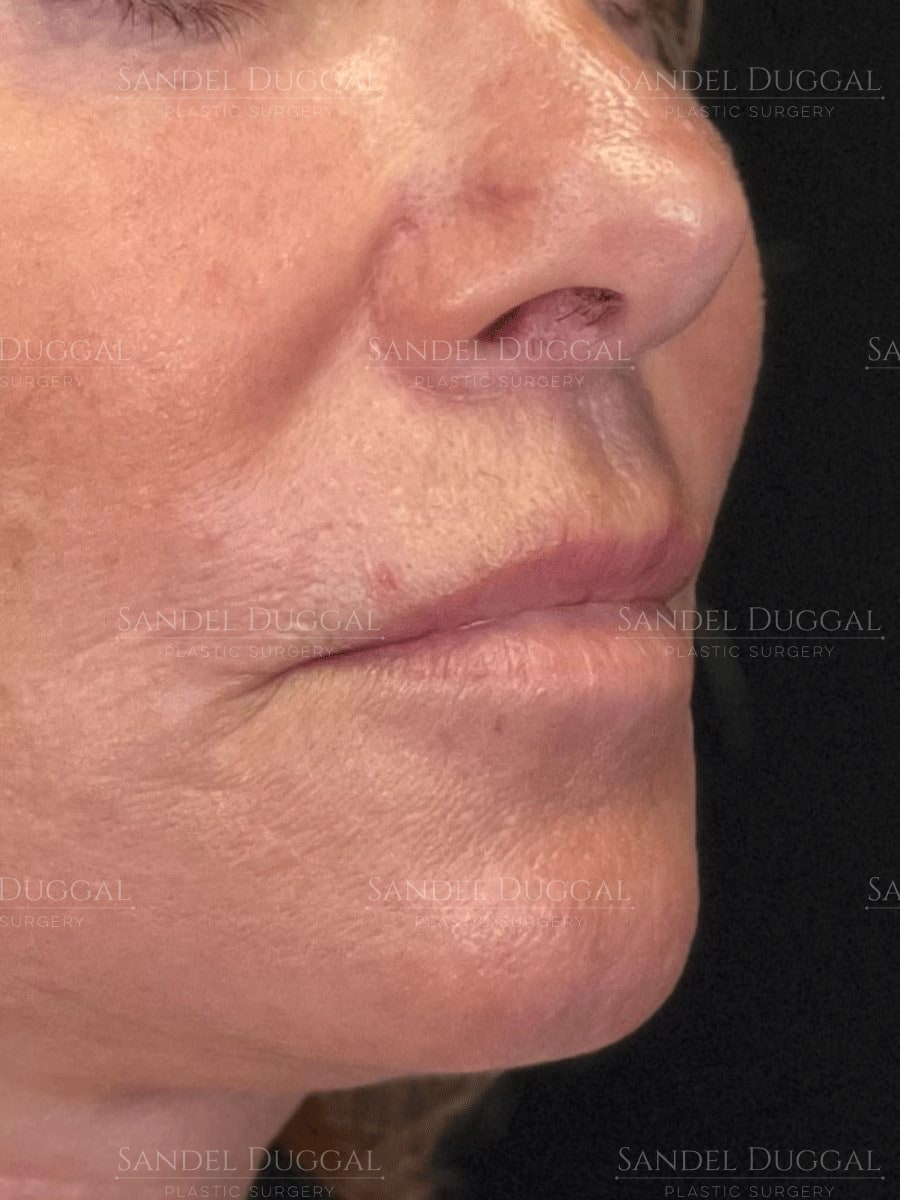 After
AfterSubnasal lip lift before and after — an actual patient of Dr. Sandel.
Proportion, not volume
The space between the base of the nose and the top of the upper lip is called the philtrum. It lengthens gradually with age, and in some people it is naturally long. As it lengthens, the upper lip rolls inward, less of the pink lip is visible, and the upper teeth stop showing at rest — changes that read as an ageing or flattened mouth even when the lip itself has not lost volume.
A subnasal lip lift removes a small strip of skin directly beneath the nose and shortens that distance. The pink of the lip rolls outward and upward, upper tooth show returns, and the mouth sits in better proportion to the nose and chin.
It is a different tool from lip filler. Filler adds volume to the body of the lip; a lip lift changes proportion and reveals lip that is already there. Patients who have had filler and still feel the upper lip looks long or flat are often the ones this suits. The two can be combined, as can a vermilion advancement or resurfacing of the skin above the lip, but the lift is what changes the shape of the mouth at rest.
The procedure
The incision follows the natural crease where the nose meets the lip, curving along the base of each nostril and across the columella — the shape it makes is why it is often called a bullhorn lip lift. The amount of skin removed is measured against your own proportions, usually a few millimetres, and the deeper tissue is closed so tension sits below the skin rather than on the scar.
It is done in our accredited West Annapolis Surgery Center under sedation and takes about an hour. A skin tape sits across the incision for about a week and sutures come out on day seven. Swelling and bruising are most pronounced in the first three to five days, the lip feels tight and looks over-lifted at first, and the final shape is apparent between three and six months. The scar fades over several months, sitting in the shadow at the base of the nose.
The result is permanent. That is the reason for measuring conservatively: too much shortening leaves the mouth looking pinched and the teeth over-exposed, and it cannot be reversed. Dr. Sandel would rather leave a millimetre on the table than take one too many.
Who it suits
A long distance between the nose and the upper lip, whether lifelong or gradual.
Little or no upper tooth show when the face is at rest.
An upper lip that reads as thin because it rolls inward, not because it lacks volume.
Filler that has added fullness without changing the shape of the mouth.
Alternatives & related
What to expect
The first days
Swelling across the upper lip and base of the nose. Soft food, no straws, and the lip feels tight when you smile.
Week one
Sutures come out. Most patients are comfortable in public, though the lip still looks fuller than the final result.
Weeks two to six
Swelling settles and the shape of the mouth becomes reliable. The scar is pink and flat.
Months three to six
The scar fades into the crease under the nose, and the final shape of the lip is apparent. Keep it out of direct sun for six months — sun is the most common cause of a permanently dark scar.
Every face heals on its own schedule. The risks worth discussing at consultation are a visible scar, asymmetry, changes to nostril shape, and over-shortening — all uncommon, none impossible.
Surgical technique
How Dr. Sandel performs the lift.
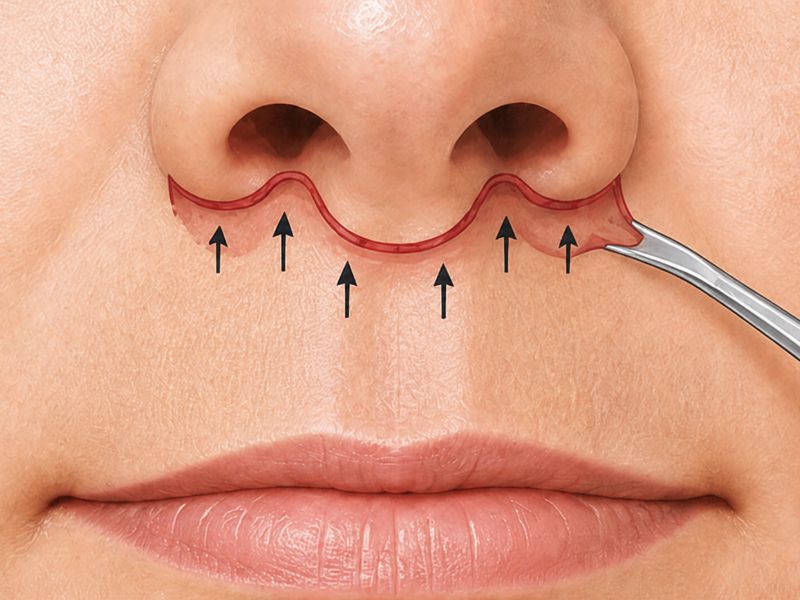
The goal is to shorten the distance between the base of the nose and the upper lip by excising skin under the nose and elevating the lip. Six steps, all through one incision hidden at the nasal base.
Key points
Shortens the philtrum
Increases upper lip show
A permanent result
Scars hidden along the alar bases and columella
Patient selection and symmetric design are critical
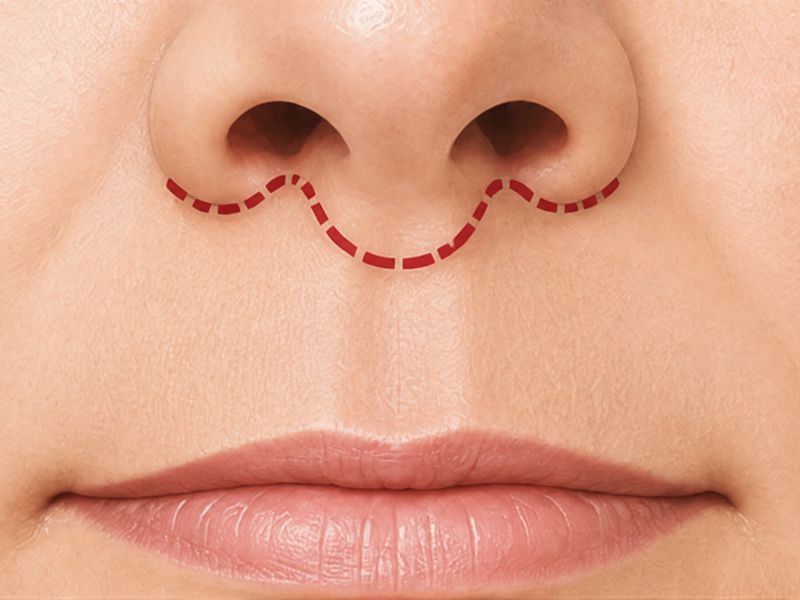
A bullhorn incision is planned along the alar bases and under the columella. Symmetric markings are essential.
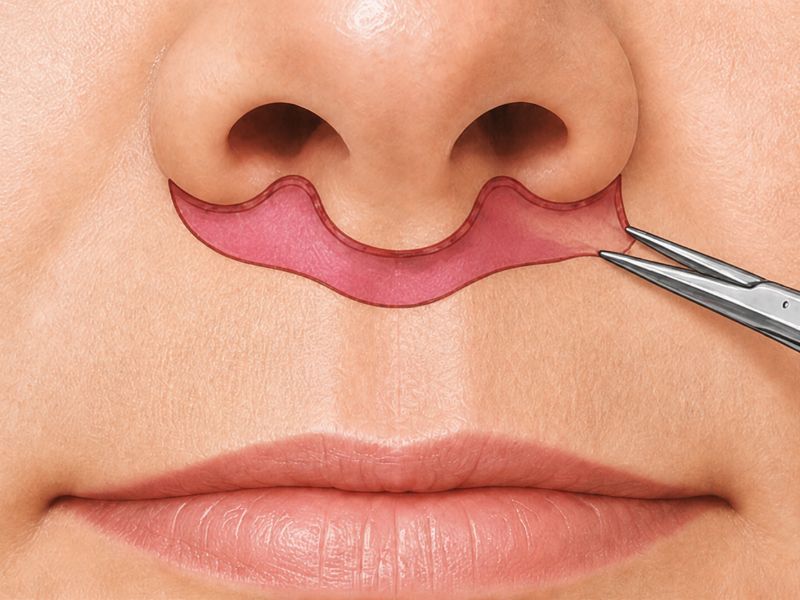
The skin within the marked area is excised full thickness, and haemostasis is achieved.
Limited undermining above the wound allows tension-free advancement of the upper lip.
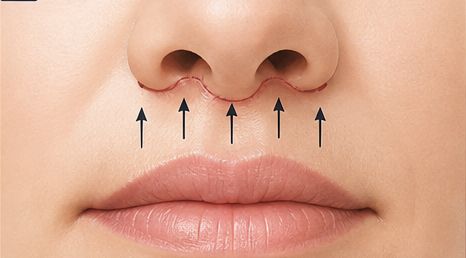
The upper lip is advanced superiorly to shorten the distance between the nose and lip. Symmetry and height are checked.
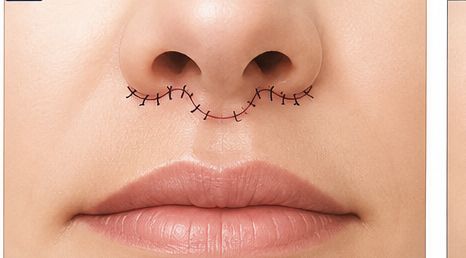
Incisions are closed in layers with fine sutures, concealing the scar along the natural border of the nostrils and columella.
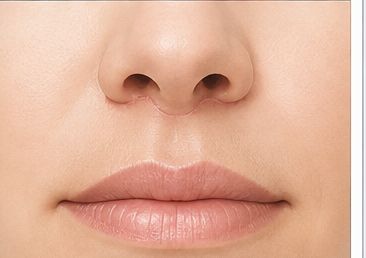
A shorter philtrum and increased upper lip show. Scars fade and sit along the natural contours of the nose.
Illustrations are for education and do not replace a consultation.
Cost
What a lip lift costs
Done under local anesthesia, with no separate anesthesia fee.
It is done under local anesthesia, which is included, so there is no separate anesthesia-provider fee.
That figure covers
You will receive a written, itemized quote at your consultation. Financing is available.
If you are considering more than one procedure, adding the prices together will overestimate the total. Two operations at one sitting take less time than the same two on separate days, and the saving is largest when a smaller procedure is added to a larger one, because most of the operating time is already accounted for.
We own West Annapolis Surgery Center and operate with the same team every day, so there is no hospital or outside facility charge passed along to you.
Fees current as of September 2026.
Talk it through with Dr. Sandel.
He will measure your philtrum, look at how much tooth shows at rest, and tell you honestly whether a lift, filler, or neither is the right answer.
Reviewed by Henry Sandel, MD · Updated October 2026