
Lower face contouring with Dr. Henry Sandel
Buccal Fat Reduction
The buccal fat pad sits in the lower cheek, and in some faces it stays full regardless of weight or exercise. Removing part of the buccal fat pad narrows that part of the face and lets the cheekbone read more clearly, through a single incision inside the mouth.
At a glance
Surgeon
Dr. Henry Sandel
Anesthesia
Local, or IV sedation
Basis
Outpatient
Incision
Inside the cheek
Sutures
Dissolving, none to remove
Back to work
The next day
Exercise
After 1 week
Result
Permanent
What buccal fat reduction is
The buccal fat pad is a discrete pocket of fat deep in the lower cheek, sitting between the cheek muscles below the cheekbone. Its size varies from person to person and has little to do with body weight, which is why a slim face can still carry a full lower cheek. Reducing the pad narrows the lower third of the face, and the cheekbone above it reads more clearly by contrast.
The result is permanent — the portion that is removed does not grow back — and that permanence is the reason Dr. Sandel is deliberately conservative with it. Faces lose volume steadily with age, and fullness that feels heavy at twenty-five often reads as youthful at fifty. How much to take is judged against the proportions of the whole face, not the pad on its own.
This tends to suit you if
Your lower cheeks stay full through changes in weight
The face reads wider through the lower third than across the cheekbones
The skin along your jawline is still firm, with no real laxity
You are at a stable weight and want a change that is noticeable without being obvious
The procedure and recovery
Reduction is an outpatient procedure done under local anesthetic, or with IV sedation if you would rather be asleep for it. A small incision is made inside the cheek, so nothing is visible on the face. The pad is eased forward through the opening and the planned amount removed, and the incision is closed with sutures that dissolve on their own — there are none to come out at a follow-up.
Swelling is mild and lasts a few days. Most patients are back at work the next day and back to exercise after a week. Because the sutures sit inside the mouth, the first days are more comfortable on soft food.
In consultation
Fullness in the lower face can come from the fat pad, from the muscle, from the shape of the jaw, or from laxity that has started to settle along the jawline. They look similar in the mirror and call for different procedures. Dr. Sandel will tell you which one you are looking at, and will say so if reduction is not the answer.
Alternatives & related
Results
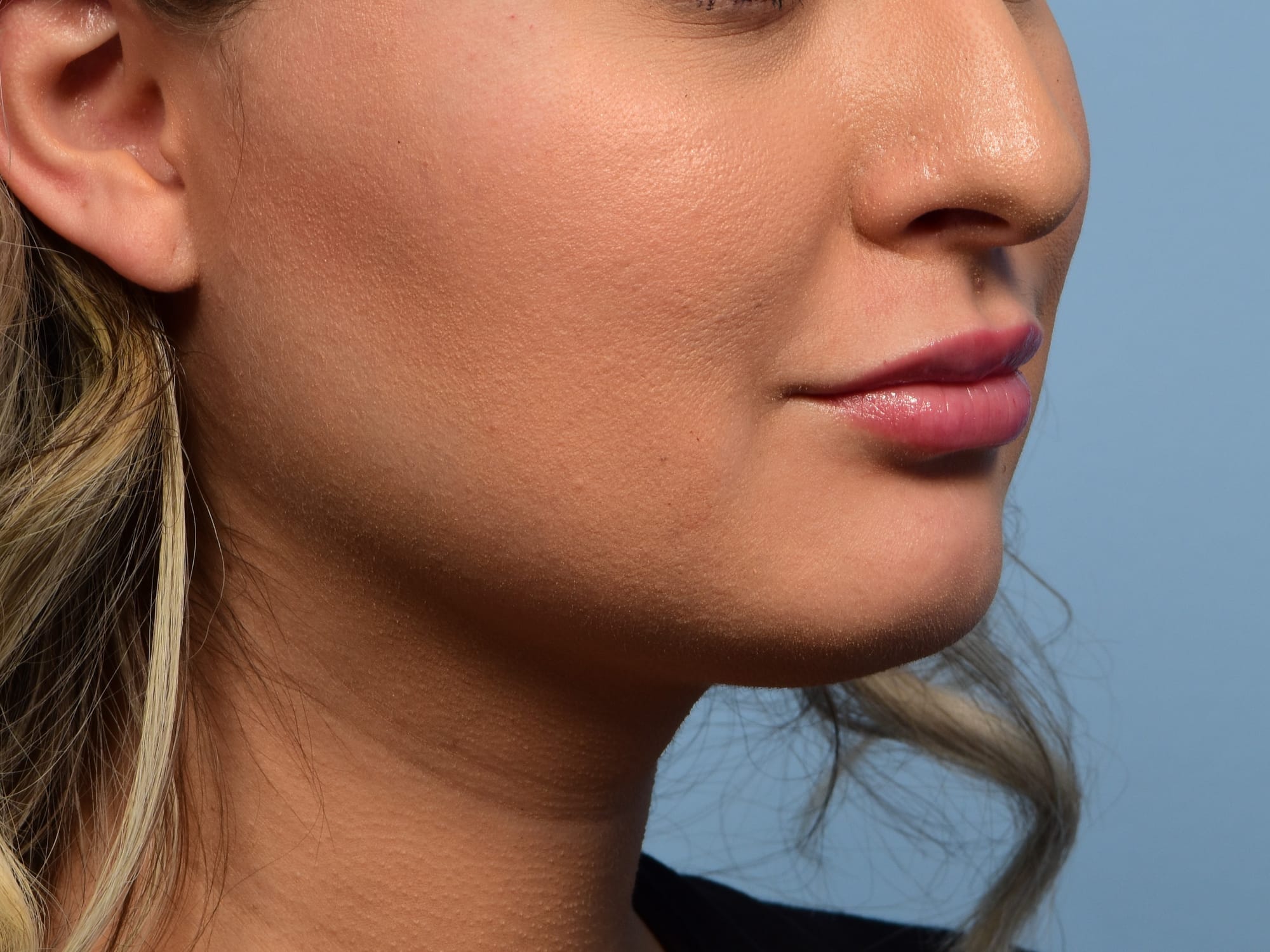
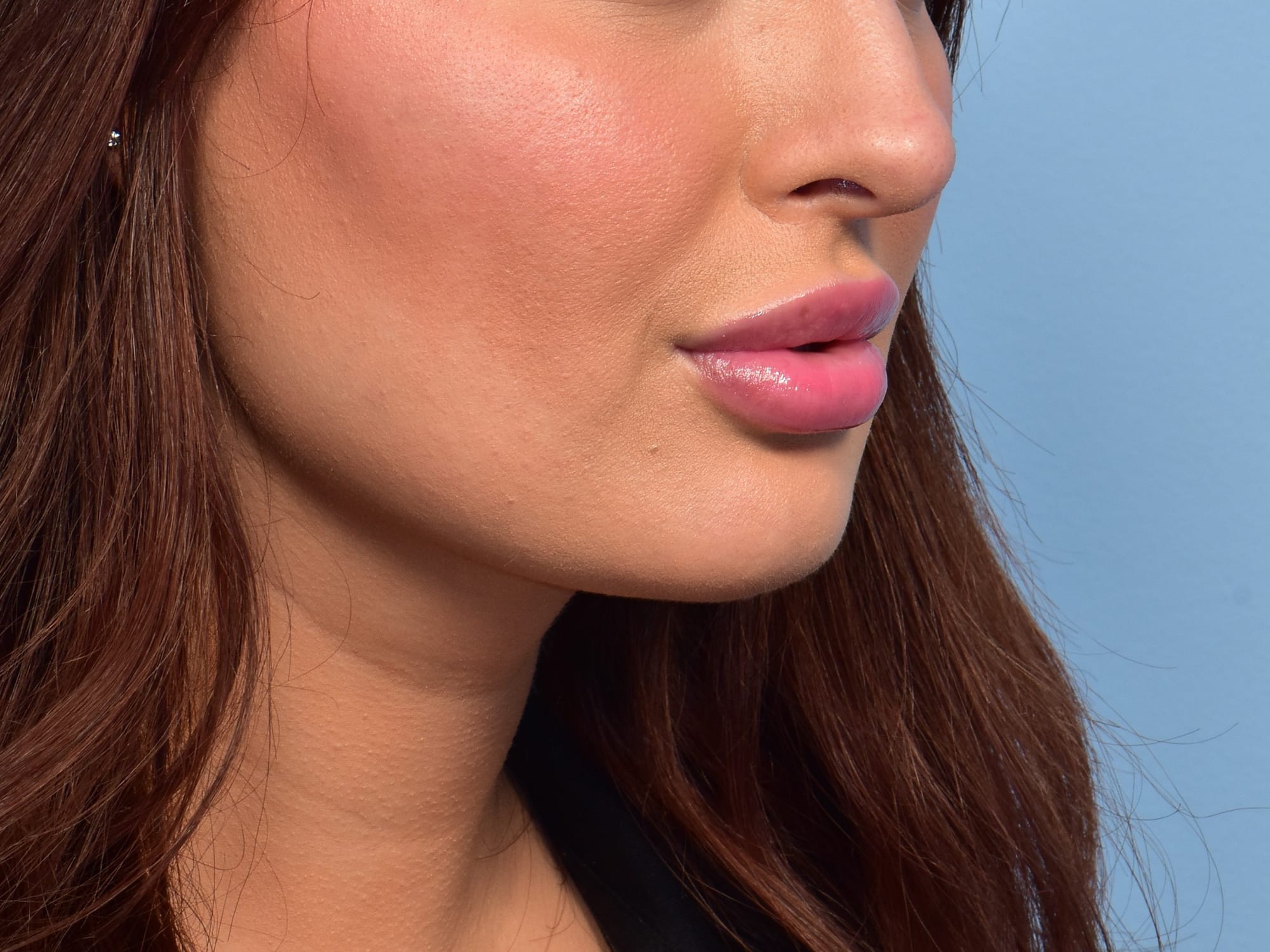
Before and after.
Photographed before surgery, and again once the swelling had settled.
The procedure, on video
Excerpts from the procedure, filmed in the operating room without sound.
Surgical footage
This video was filmed in the operating room.
It shows the procedure being performed and some viewers will find it graphic. There is no sound.
I understand, show the video
Contains surgical footage. No audio.
Where it does not help
What reduction will not do.
Tighten loose skin
Reduction takes out volume and leaves the skin envelope exactly as it was. Where the concern is laxity along the jawline, a lift is what addresses it — and the two are often planned together.
FaceliftSlim under the chin
Fullness below the jawline sits in a different fat compartment and cannot be reached through the cheek. It is treated directly, and commonly at the same time.
Chin & Neck LiposuctionBuild the cheekbone
Narrowing the cheek below the bone increases contrast, but it does not add projection. Where the cheekbone itself is flat, augmentation is the direct route.
Cheek ImplantsQuestions patients ask.
Request a consultation.
Buccal fat reduction is a small operation with a permanent result, so it is worth being sure it is the right one. Dr. Sandel will look at the whole face and tell you plainly whether reduction suits your proportions, or whether it would work against them.