

Otoplasty with Dr. Henry Sandel
Otoplasty
A cosmetic procedure to bring the shape of the ears into proportion with the head. Children are often the most likely candidates, though adults have the procedure as well.
At a glance
Surgeon
Dr. Henry Sandel
Children from
About age 5
Anesthesia
In our accredited surgery center
Setting
Operating room
Head wrap
First week
Sutures
Dissolve on their own
Who it helps, and when
Otoplasty alters the shape of the ears to suit the size and shape of the head. It does not improve or detract from hearing ability.
Children become candidates around the age of five. This is an important time in their lives as they begin to develop a positive self image, and it is when teasing about ears often starts as they enter school. Otoplasty works very well at this age because the cartilage is pliable and soft.
Adults who are concerned about torn, stretched, or enlarged earlobes are treated with a separate in-office procedure. See earlobe repair and reduction.
The consultation
The process begins with an in-depth consultation involving everyone concerned — parents and children, or the adult patient. We discuss options for improvement and the procedures involved, and a 3D imaging system can show what your results may look like. That helps everyone understand exactly what we are trying to accomplish, as well as the limitations of the procedure.
Otoplasty is performed in our accredited West Annapolis Surgery Center under anesthesia, for children and adults alike, so the ears can be reshaped with the patient completely still and comfortable.
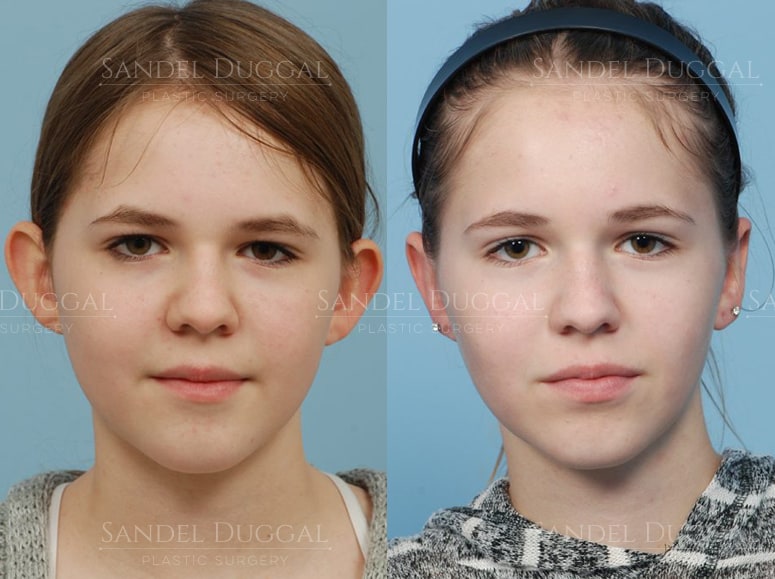
Otoplasty before and after.
Related procedures
How it is performed
One procedure, with the scar hidden behind the ear.
The scar sits in the natural fold where the ear meets the head, and is virtually invisible once healed.
Ear pinning
Incisions are made just behind the ear in the natural skin folds where the ear joins the head. The necessary amount of skin and cartilage is removed to achieve the desired shape before pinning the cartilage back with permanent sutures. In some procedures no skin or cartilage needs to be removed.
Recovery
For children, recovery is simple. Sutures behind the ear dissolve and do not have to be removed. A light ear-muff type wrap protects the ears for the first week, especially during sleep. There is very little pain, which can be controlled with Tylenol.
Recovery
A week in a head wrap, then quietly done.
Otoplasty asks little of a patient beyond protecting the ears while they settle. Most of the work is remembering not to catch them.
This is the guidance we give every patient, alongside the general instructions that follow any surgery. Your own sheet and Dr. Sandel’s instructions govern your case. Call the office on (410) 266-7120 with any question about your healing.
The first days
Ice packs gently around the ears for the first three to four days, and sleep on your back so nothing presses on them. You may shower and gently shampoo once the dressings are off; no blow dryer unless we tell you otherwise.
The head wrap
A protective wrap that lightly covers the ears, worn for at least a week and especially at night.
How it feels
Throbbing, soreness and a tight feeling, with numbness and tingling of the ears.
Protecting the result
Avoid anything that could catch or pull an ear forward, and no earrings until we clear it.
Several weeks
Swelling settles. Numbness can linger, but normal sensation typically returns over time.
When to call
If the bandages feel too tight, or the operated area becomes increasingly red or hot.
Cost
What ear surgery costs
One figure, quoted in writing before you decide.
Every figure covers
You will receive a written, itemized quote at your consultation. Financing is available.
If you are considering more than one procedure, adding the prices together will overestimate the total. Two operations at one sitting take less time than the same two on separate days, and the saving is largest when a smaller procedure is added to a larger one, because most of the operating time is already accounted for.
We own West Annapolis Surgery Center and operate with the same team every day, so there is no hospital or outside facility charge passed along to you.
Fees current as of September 2026.
Bring the whole family in.
For children, the consultation includes parents and child together, so everyone understands the plan and what it can realistically achieve.